When I began my PhD program in 2021, one of my first steps was conducting a systematic review in my proposed area of research. This process helped me engage deeply with the existing literature and identify key gaps that my dissertation could address. Although the review was published a few years ago, I’m sharing it here as it provides a valuable foundation for understanding the broader context of my doctoral work—insights I’ll be exploring further in future posts.
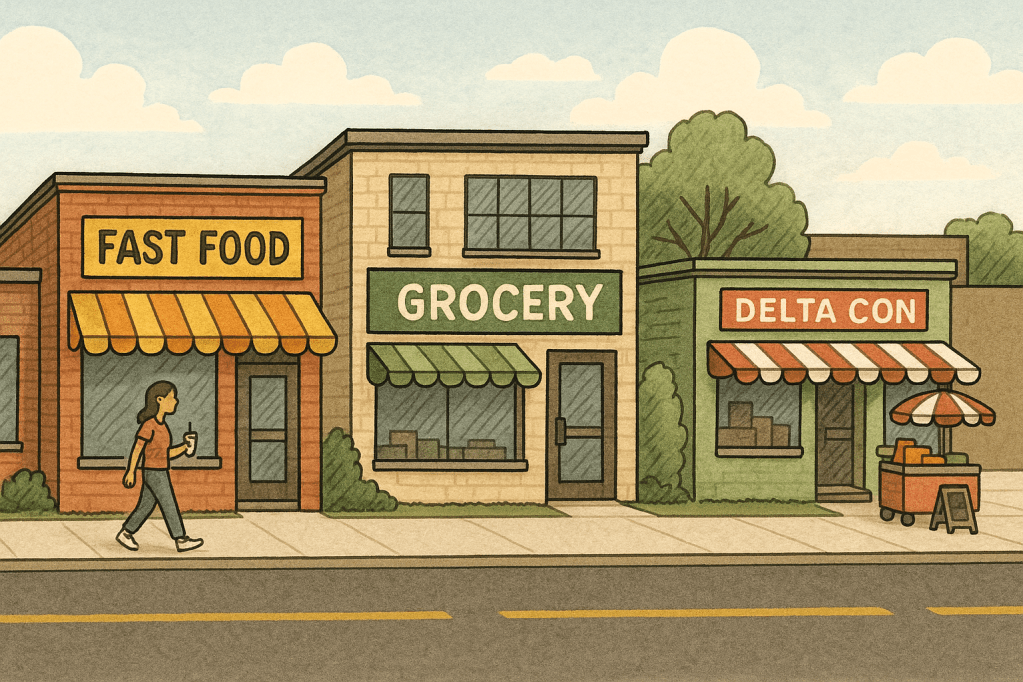
The review focuses on a critical question that has shaped much of my research: how do neighbourhood food environments influence adolescents’ dietary behaviors? Specifically, it examines whether the types and number of food retailers near schools affect adolescents’ food purchasing. Adolescents often purchase food during the school day or while commuting—and what’s available nearby can play a big role in shaping those choices.
The review includes 12 observational studies published between 2012 and 2022. These studies focus on adolescents aged 10 to 19 and assess their access or exposure to food outlets—such as fast-food restaurants and convenience stores—and the frequency of their unhealthy food purchases.
Key findings
- Nearly one-third of the results showed that a high density of unhealthy food outlets near schools or along students’ routes to school was linked to more frequent purchases of energy-dense, nutrient-poor foods.
- Only one study found a significant negative association—suggesting that in some contexts (such as Scotland), more nearby convenience stores were linked to fewer unhealthy purchases, though this finding was an exception.
However, most studies did not find statistically significant associations, and many had methodological limitations. All studies relied on self-reported data, and none assessed the actual nutritional content of the food purchased. The ways food environments were defined and measured also varied widely, making it difficult to draw strong conclusions.
Why it matters
This review highlights that the food environment surrounding schools may influence adolescents’ food purchasing behaviors, though the evidence remains mixed. It also underscores the need for higher-quality research that better defines exposure, uses validated tools, and examines what adolescents are actually buying.
Implications
Improving the food landscape around schools—by limiting unhealthy food outlets or increasing access to healthier options—could be a meaningful strategy to support healthier eating among teens. But stronger evidence is needed to guide effective policies.
The findings highlight the importance of considering neighbourhood food environments in policies aimed at improving adolescent diet quality. Interventions could include zoning policies to limit the concentration of fast-food outlets near schools, as well as initiatives to promote healthier food retail options within walking distance of students.
Caruso, O., McEachern, L., Minaker, L., & Gilliland, J. (2024). The Influence of the School Neighborhood Food Retail Environment on Unhealthy Food Purchasing Behaviors Among Adolescents: A Systematic Review. Journal of Nutrition Education and Behavior, 56(3), 145–161. https://doi.org/10.1016/j.jneb.2023.11.005

 Olivia Caruso